
Say hello to plethora of tubes and refractory, mandatory repairs and related downtime
The Scotch marine boiler, long regarded as the U.S. industry standard, is based on a 200-year-old design that is now significantly outdated compared to modern European alternatives, for the following reasons:
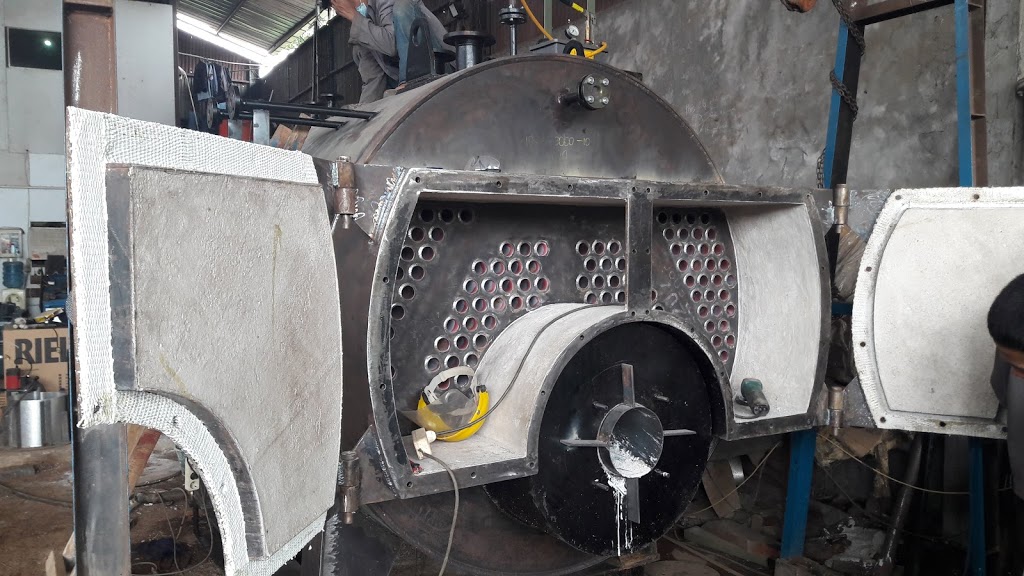
Excessive number of tubes, dictated by the antiquated 5 sq.ft./HP rule of thumb, results in reduced heat transfer efficiency at part load, increasing fuel consumption.
Extensive use of refractory, which acts as a heat sink, degrades over time and requires replacement—often incurring substantial downtime costs.
Frequent leaks caused by thermal stress from radiant refractory surfaces lead to costly repairs and operational interruptions.
Stagnant innovation, with the last notable advancement being the replacement of rivets with welding.
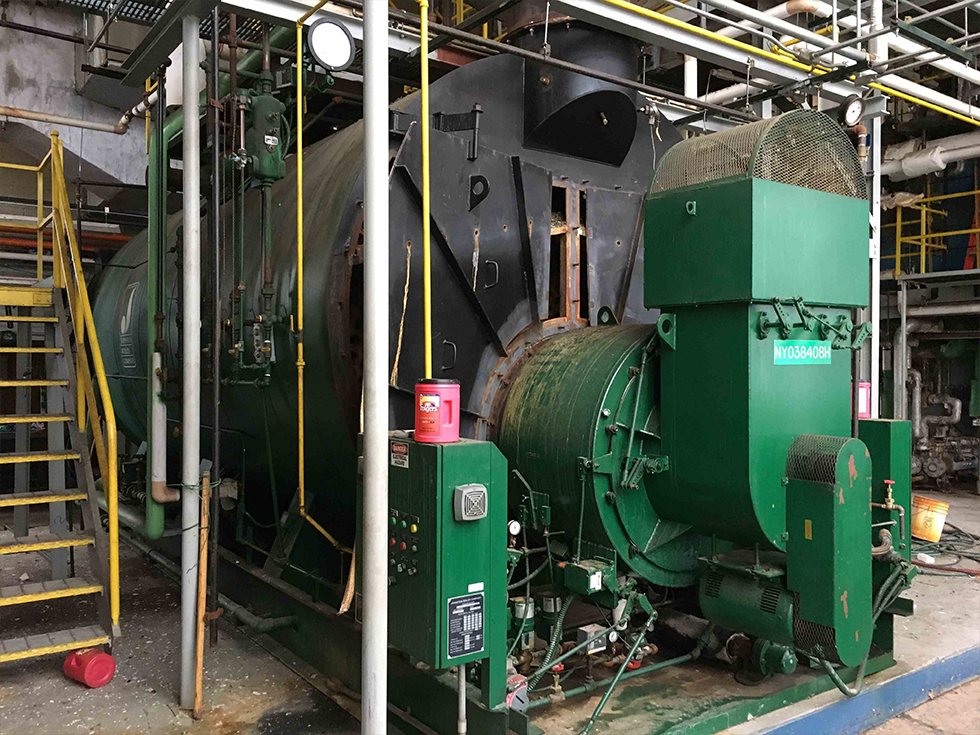
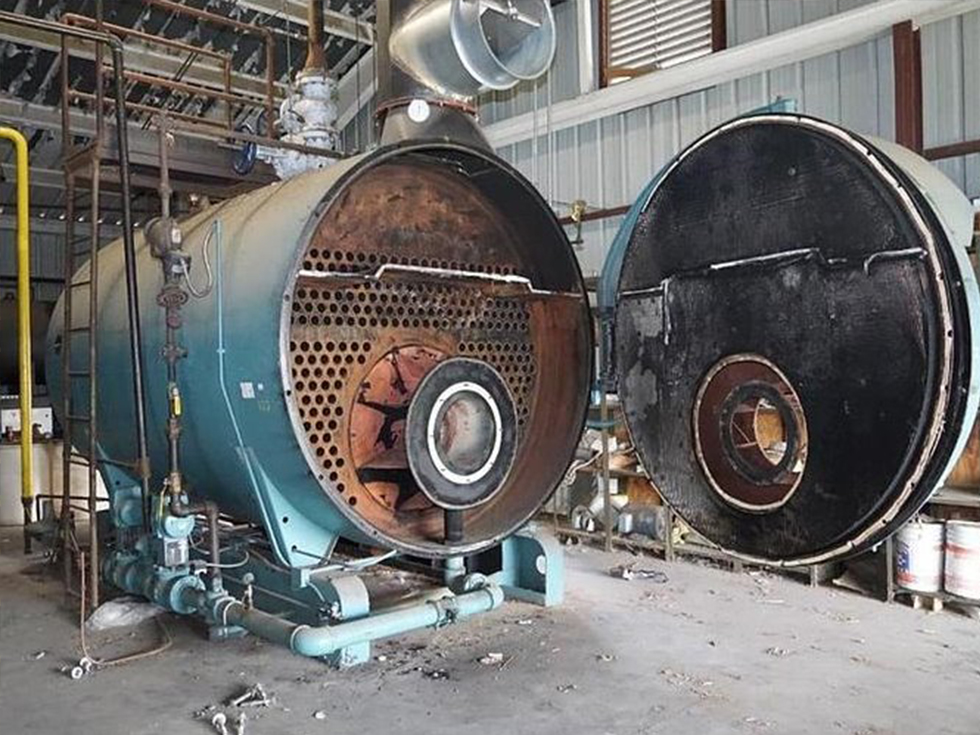
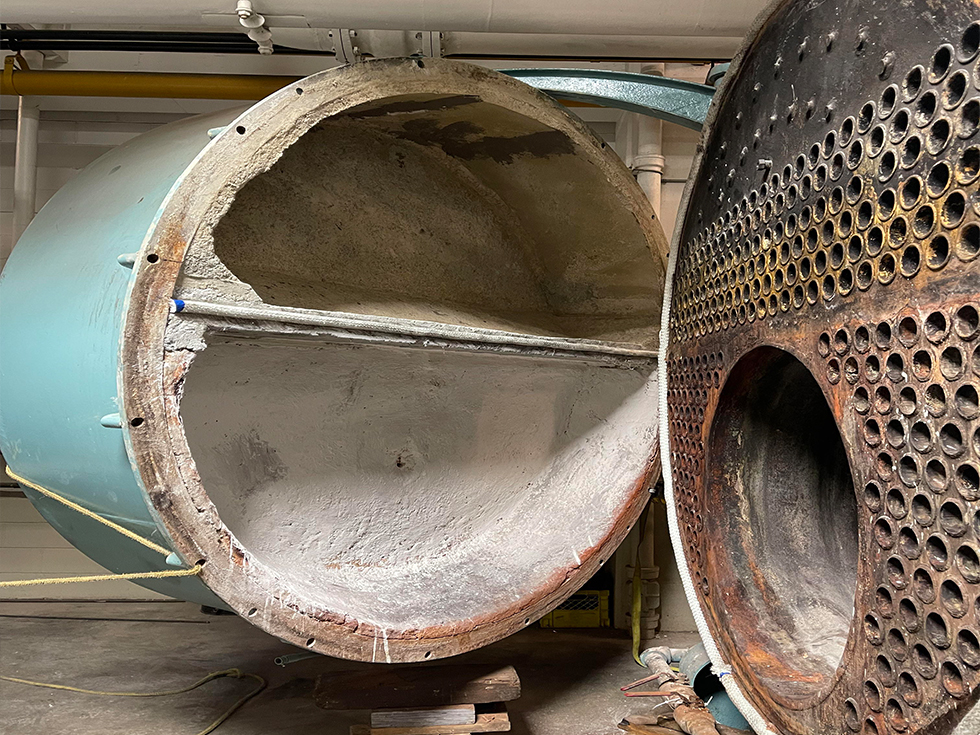
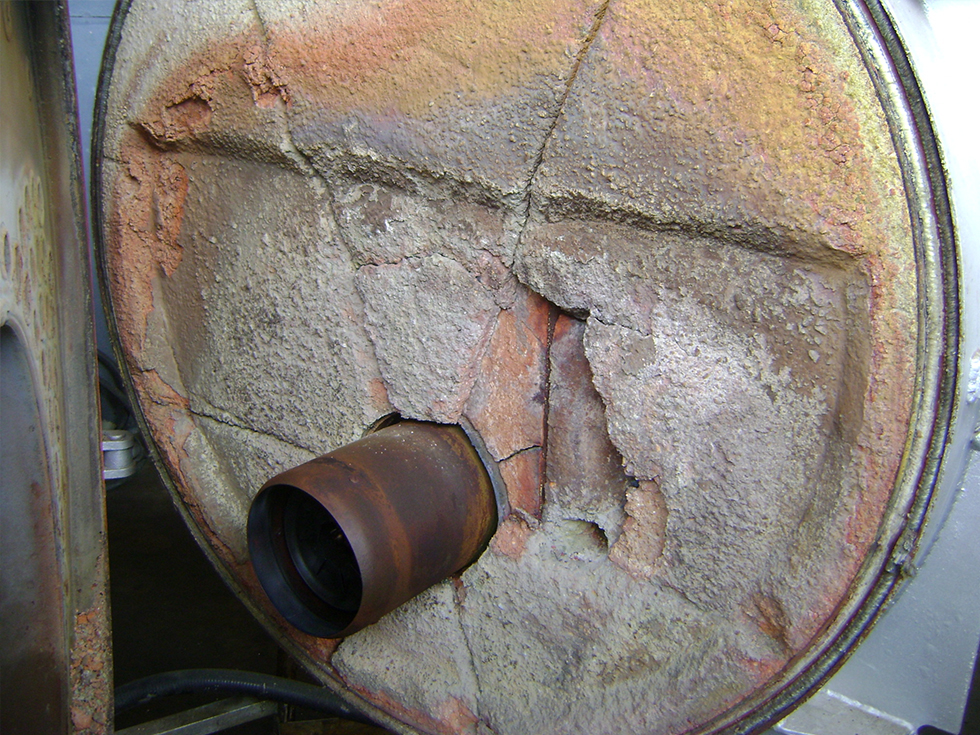
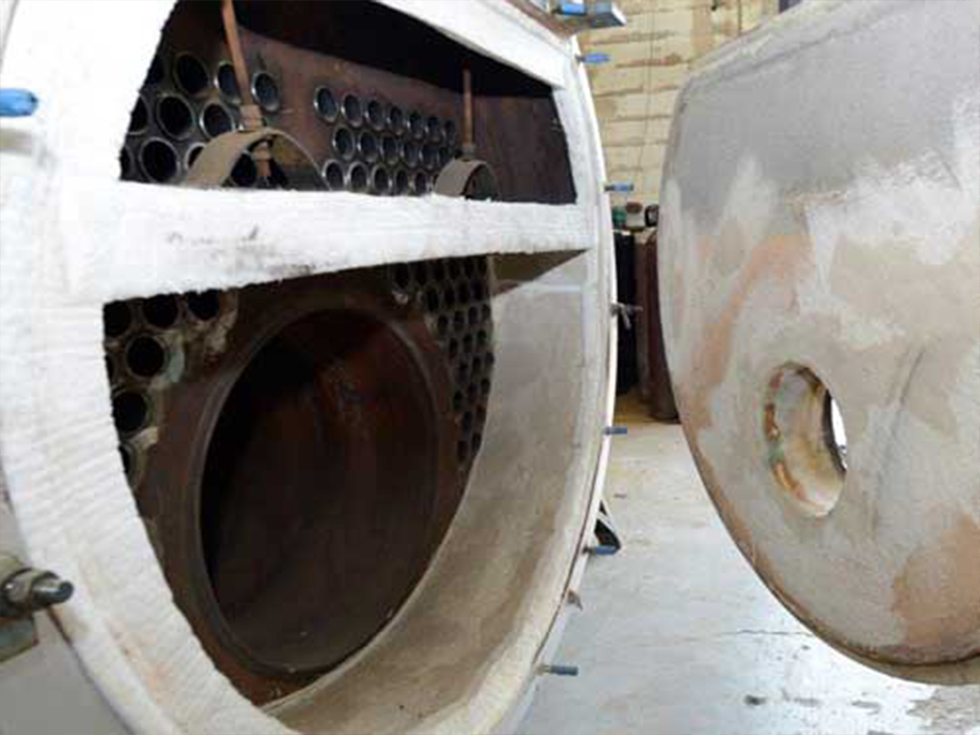
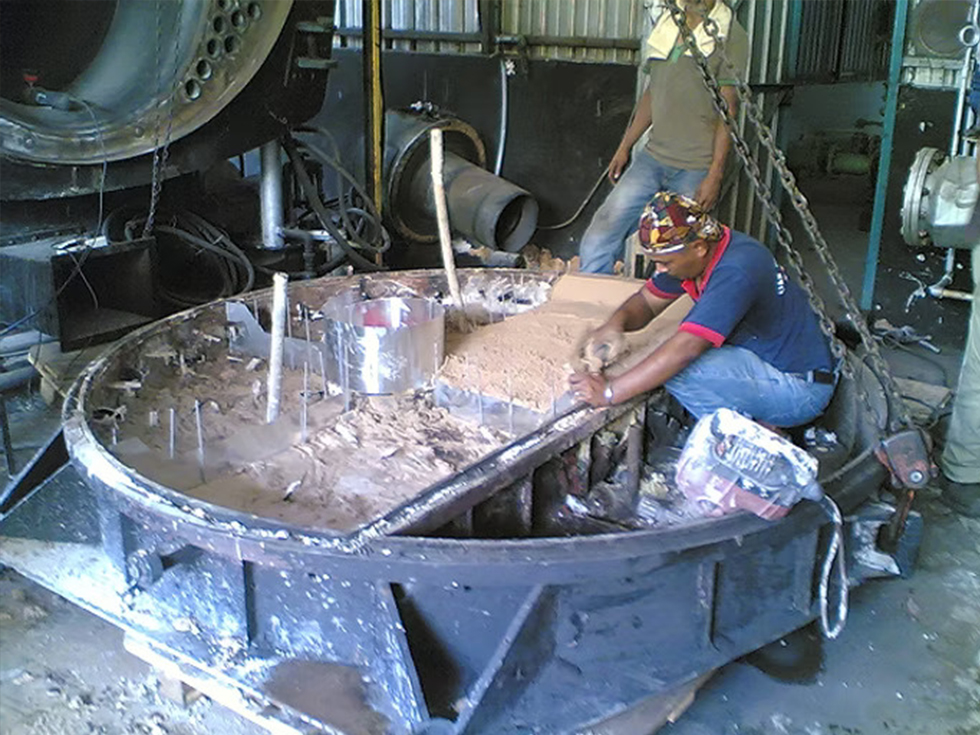
The standard US scotch marine design uses massive amounts of traditional refractory, which requires high levels of maintenance but does not contribute to long term reliability or boiler efficiency. The Warga design rectifies this unacceptable flaw.
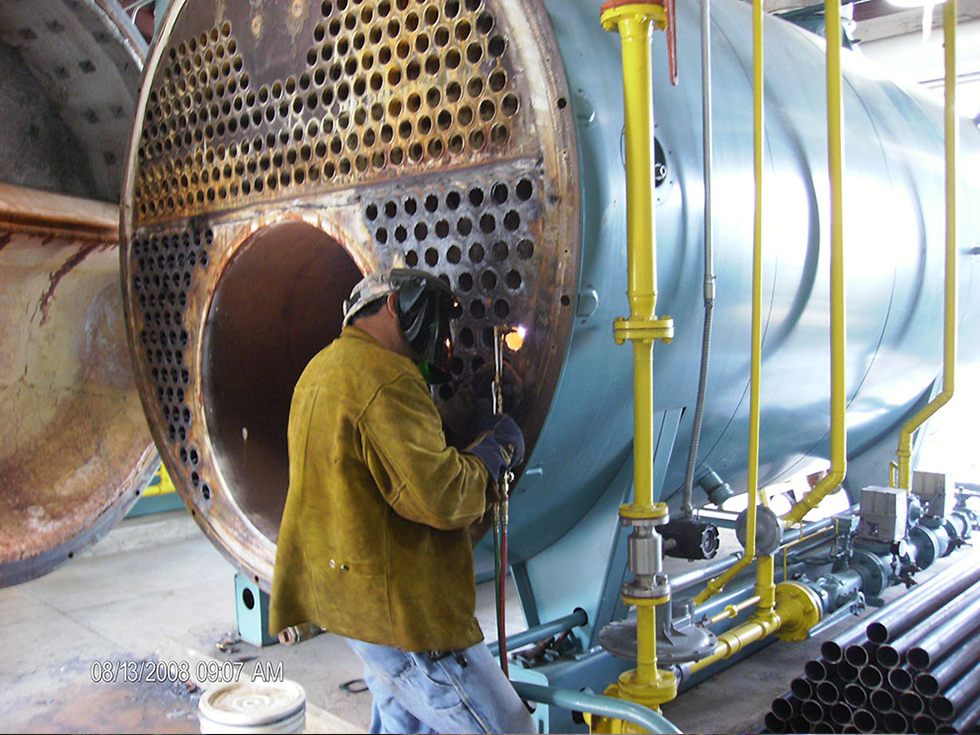

The second most significant design flaw of the Scotch marine boiler is the frequent occurrence of cracks and leaks, particularly at the tubesheet. These failures often necessitate rewelding and, in some cases, tube replacement—a labor-intensive and costly process that can approach the price of a new boiler. By contrast, the Warga design has demonstrated exceptional reliability, with no reported leaks or cracks at the U.S. site since its commissioning in 1999.
Scotch Marine boilers: surface too hot to touch
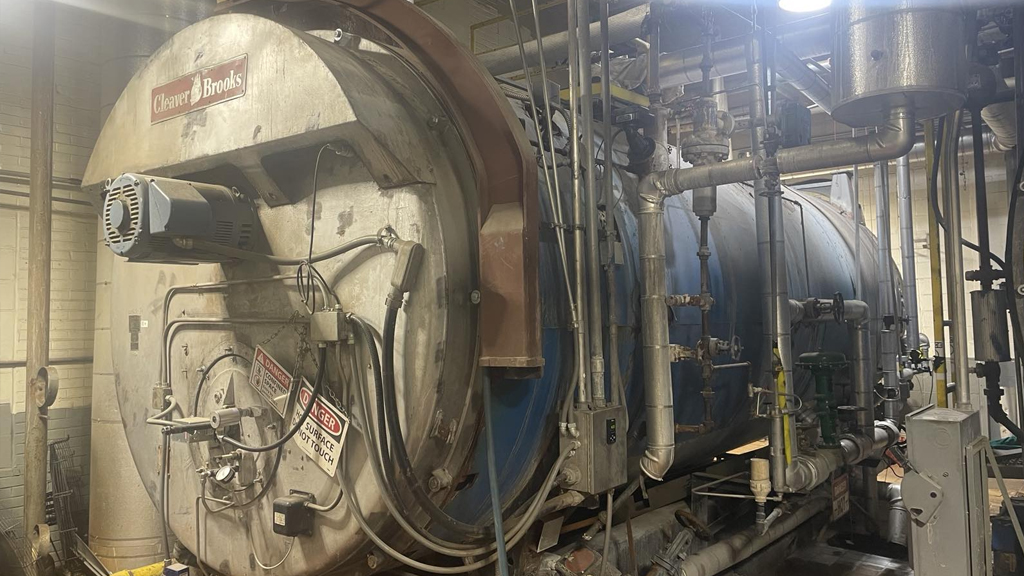
Thermal Imaging-FLIR
Scotch Marine boilers: significant exterior losses can not be avoided